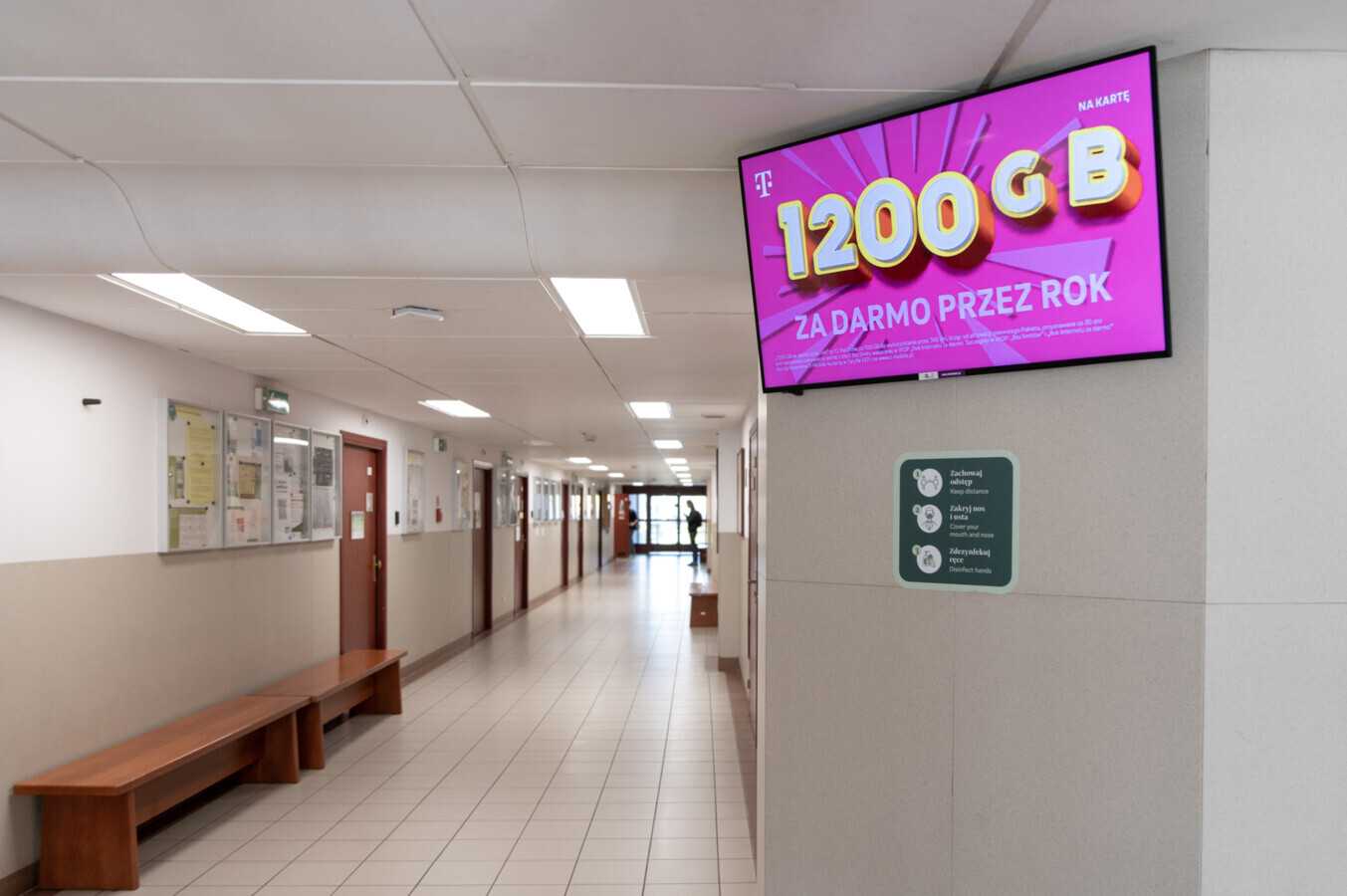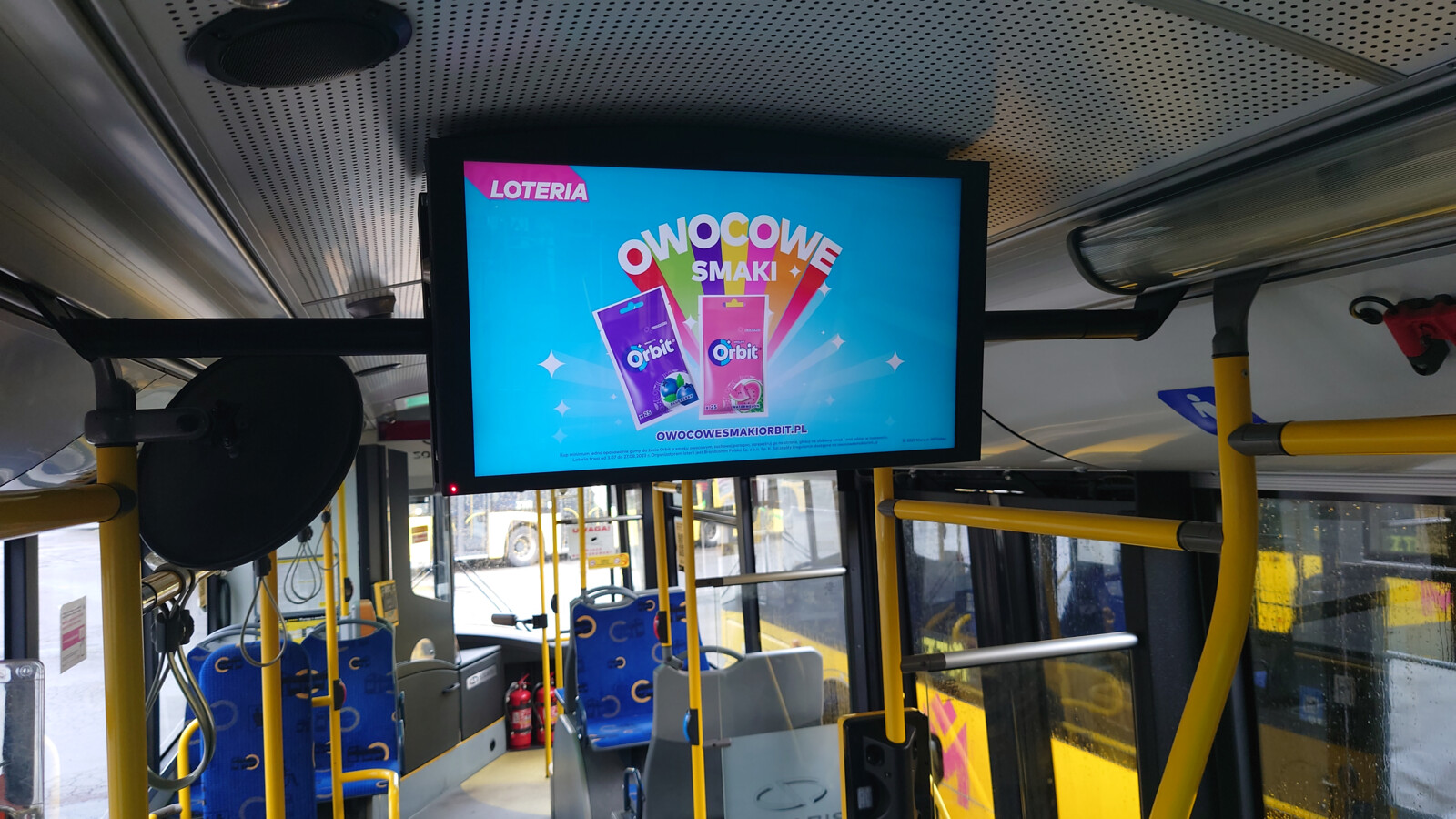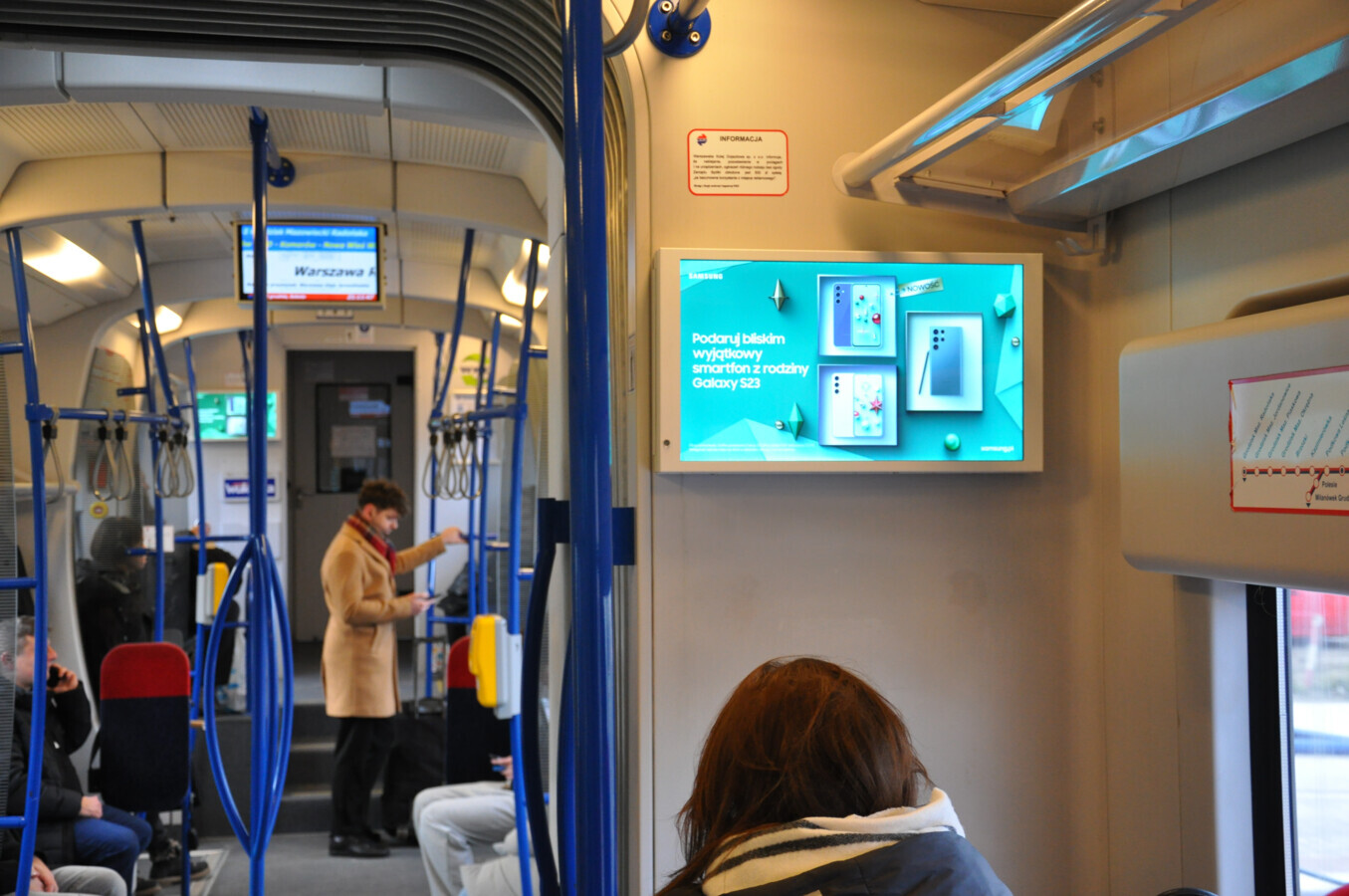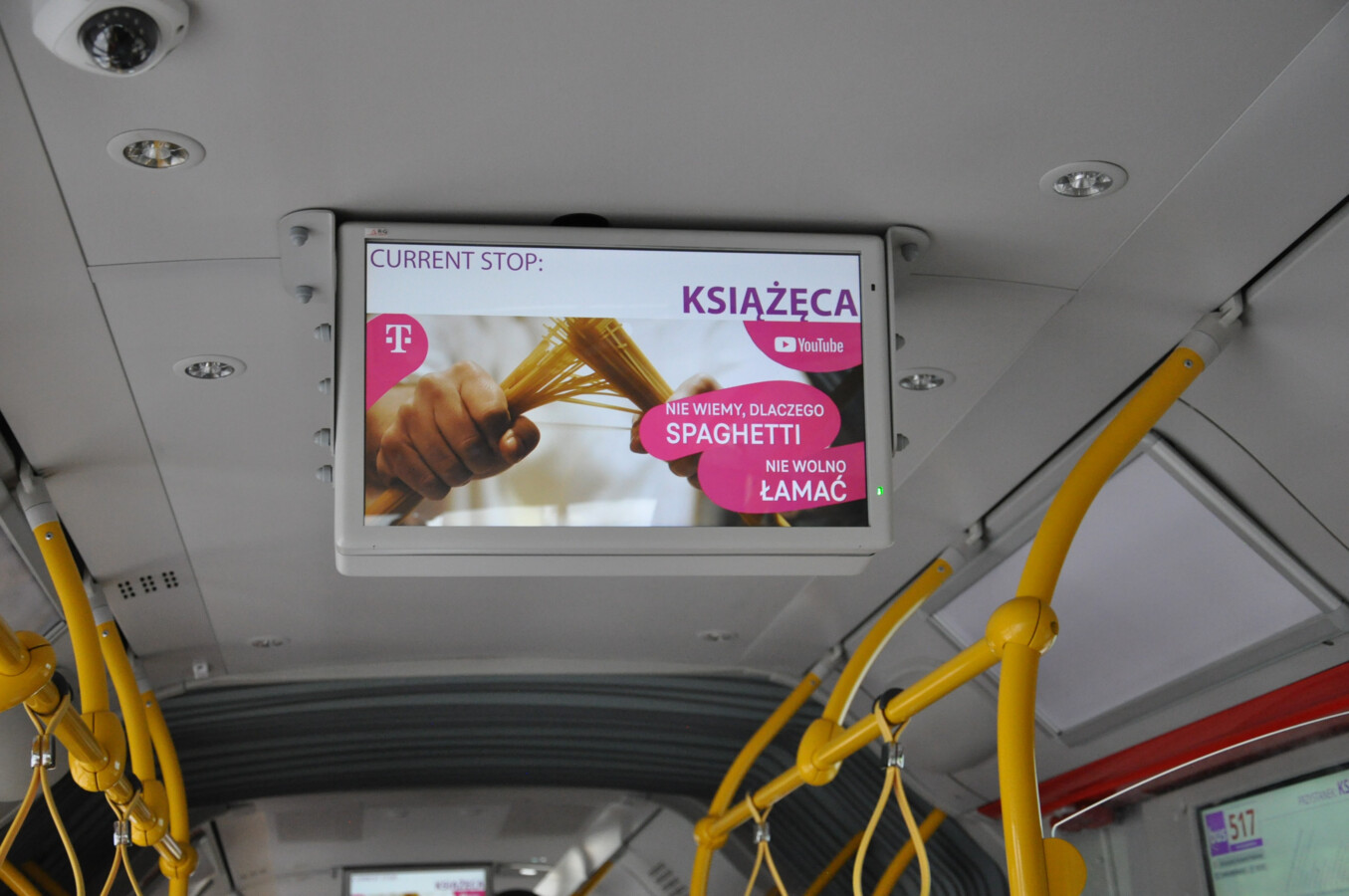




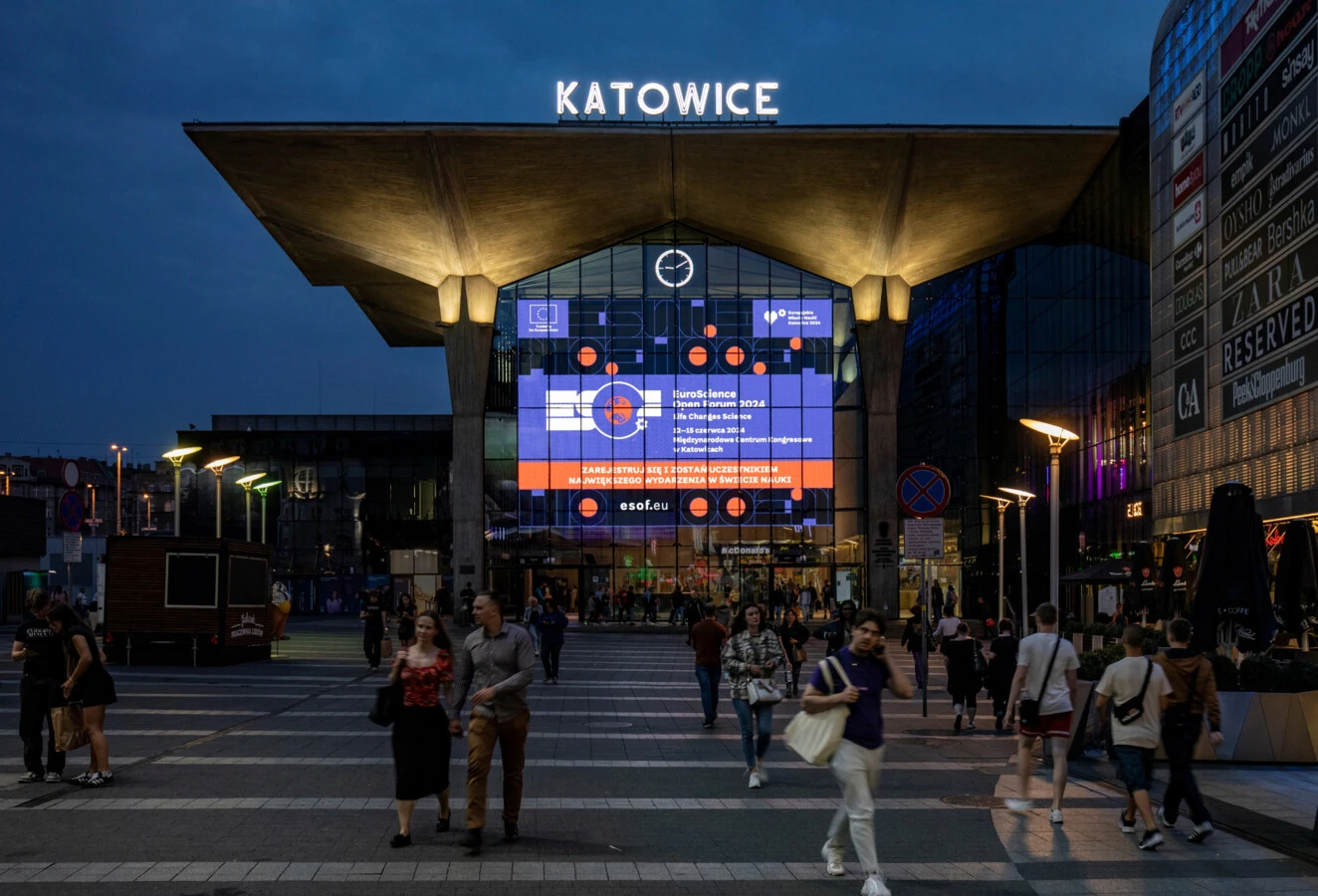
LCD screen advertising is one of the most popular forms of digital out-of-home advertising. You can spot it in buses, trams, trains, shopping malls, service venues, office buildings, medical clinics, hotels, restaurants, or transit hubs. At its core, it relies on broadcasting short promotional messages on monitors strategically installed in spaces where audiences naturally spend time, commute, or wait.
This medium falls under the DOOH category, which stands for Digital Out-of-Home. In practice, it refers to digital outdoor or semi-outdoor advertising displayed outside the consumer's home. Unlike traditional paper posters, billboards, or citylights, DOOH advertising eliminates the need for printing physical materials. A message can be produced as a video spot, dynamic animation, graphic slide, or short text update and broadcast in a scheduled loop.
What Is LCD Screen Advertising?
LCD screen advertising consists of presenting promotional content on digital monitors located in selected venues. These can range from standalone screens in a single establishment to extensive media networks spanning dozens of locations, transit vehicles, or public venues.
Most campaigns utilize short video ads lasting 10, 15, or 30 seconds. This format makes it easy to deliver a key message in a fast, legible, and visually engaging manner. Ads can promote products, services, upcoming events, job openings, community initiatives, seasonal deals, or specific store locations.
In many environments, LCD screens operate silently without audio, placing full emphasis on visual design. A well-crafted video ad should be immediately understandable even if a passerby only glances at the screen for a brief second. A straightforward headline, clear logo, sharp visuals, and a crisp value proposition are key.
LCD Advertising vs. Traditional Outdoor Media
Traditional outdoor advertising relies heavily on printed media. Billboards, posters, citylights, or vinyl wraps offer continuous exposure, but updating them requires new designs, printing, and manual installation. LCD screens, on the other hand, manage content digitally, offering unparalleled flexibility.
This allows advertisers to quickly adapt campaigns to active promotions, seasonal shifts, live events, or changing business priorities. It is particularly beneficial for brands running agile marketing strategies that demand rapid responses to market shifts.
LCD screens also leverage movement, dynamic transitions, and multi-slide stories. Movement naturally draws the human eye far better than static posters. However, motion alone does not guarantee success—the core strength of any ad relies on message clarity and contextual relevance to its placement.
How a DOOH LCD Screen Campaign Works
Launching an LCD screen campaign starts with selecting the right venues or network channels. Advertisers define their target audience, target regions, campaign duration, and core message. Next, the creative content is formatted according to the technical specifications of the display network.
Following technical validation, the video spot or graphic artwork is loaded into the scheduling system to run in a continuous loop. Depending on strategy, ads can target specific screens, key locations, transit routes, cities, or time slots. Once the campaign concludes, advertisers receive a performance report detailing playback metrics.
A typical execution process includes:
- Defining campaign goals
- Selecting locations or network channels
- Setting campaign duration
- Designing creative assets
- Verifying technical requirements
- Launching the broadcast
- Reviewing campaign reports
A successful DOOH campaign goes beyond just playing a video loop. Matching the network context to audience demographics and campaign objectives is essential. A recruitment campaign requires vastly different placements than an ad for a local restaurant, sports event, or new service center.
What Content Can Be Displayed on LCD Screens?
LCD screens accommodate short video spots, animated graphics, promotional slides, public announcements, and simple ad sequences. Content can span multiple scenes, but should never overwhelm viewers with information overload.
Messages that can be digested in a matter of seconds perform best. Dense blocks of text, small fonts, cluttered layouts, or multiple competing calls-to-action degrade campaign performance. Viewers do not read screens like articles or flyers—they scan them quickly, making simplicity paramount.
A high-performing LCD screen ad should include:
- A single primary headline
- A clear logo or brand name
- A simple, direct offer statement
- High-contrast visual graphics
- A concise URL, location, or CTA
- Clean visual hierarchy for easy reading
- A message fully readable without sound
Remember that an LCD screen is not the place for an exhaustive corporate presentation. It serves as a rapid touchpoint with your brand designed to grab attention, convey key value, and spark immediate interest.
Key Benefits of LCD Screen Advertising
Flexibility stands as one of the chief advantages of DOOH advertising. Creative assets can be developed and updated much faster than physical print media. This makes it ideal for flash sales, event promotion, seasonal launches, recruitment drives, and hyper-local marketing.
Another major benefit is visual engagement. Motion graphics, video, and dynamic transitions naturally pull the eye. In captive environments like public transit vehicles, waiting rooms, or customer service areas, audiences have the dwell time needed to notice and process your message.
Localized targeting is equally valuable. LCD campaigns can be customized by city, neighborhood, or venue type. This makes them highly effective for regional campaigns aimed at reaching consumers where they live, work, and move.
Finally, repeated exposure helps drive message retention. Commuters and regular visitors along specific routes or venues encounter the ad multiple times throughout a campaign, reinforcing brand recognition and solidifying message recall.
Limitations to Keep in Mind
While LCD screen advertising offers immense advantages, it is important to account for its limitations. The primary constraint is often the lack of audio. If a video spot relies heavily on a voiceover or dialogue to make sense, it will fail on silent displays.
Exposure time is another factor. Viewers rarely watch a display screen from the exact start to the end of a video spot. Consequently, critical information must be clear instantly rather than held for a final end-card reveal.
Measurement also differs from digital web channels. While DOOH campaigns provide robust delivery reporting on plays, screen counts, and scheduling, they do not track direct clicks like web ads. Combining LCD displays with dedicated landing pages, promo codes, QR codes, or retargeted digital ads bridges this gap effectively.
Which Businesses and Locations Benefit Most from LCD Advertising?
Campaign performance relies heavily on pairing your brand message with the right physical context. LCD media performs best in spaces where consumers spend extended time or pass by regularly.
- Public Transport (buses, trams, trains) – Passengers on daily commutes naturally look for visual engagement, leading to longer dwell times. Excellent for local services, retail, dining, healthcare, higher education, and regional recruitment campaigns.
- Shopping Malls & Retail Stores – Consumers in these areas are in a buying mindset but moving actively. Visuals must be dynamic and punchy. Perfect for fashion brands, beauty services, real estate projects, and local entertainment events.
- Waiting Areas & Service Hubs (clinics, gyms, office hubs, hotels) – Extended dwell times in waiting areas make ads feel non-intrusive while easing boredom. Great for aesthetic clinics, fitness centers, training programs, and B2B service providers.
Success lies in strategic placement rather than blanket exposure. A local restaurant seeking foot traffic within a two-mile radius needs different placements than a national retail chain launching a brand awareness campaign.
LCD Screen Advertising as a Modern Brand Communication Tool
LCD screen advertising seamlessly connects the broad presence of outdoor marketing with the agility of digital media. It enables brands to deploy engaging short-form video, dynamic graphics, and timely updates directly in spaces where consumers naturally spend time.
Achieving strong results requires choosing relevant locations, crafting crisp visuals, and establishing clear campaign goals. LCD displays excel at delivering fast, compelling visual messages tailored to the surrounding environment and target audience.
For businesses looking to boost local presence, promote events, drive sales, recruit talent, or complement online marketing efforts, DOOH LCD screen advertising offers a powerful addition to any modern marketing strategy.
Considering an LCD screen campaign? Contact us today. Media Miejskie will help you choose the right locations, ad formats, and campaign strategies tailored to your business goals.
FAQ – Frequently Asked Questions
What is LCD screen advertising?
LCD screen advertising is a form of digital advertising displayed on monitors located in public, transit, or commercial spaces. It can take the form of video spots, animations, graphics, or short informational messages.
Is LCD screen advertising considered DOOH?
Yes. In most cases, LCD screen advertising is part of DOOH (Digital Out-of-Home). This refers to digital advertising outside the consumer's home, displayed on screens in public transport, shopping malls, service venues, or other public locations.
Where can LCD screen ads be displayed?
Ads can be displayed in buses, trams, trains, shopping malls, service centers, medical clinics, office buildings, hotels, restaurants, and other venues equipped with digital signage screens.
How long should an LCD screen ad spot be?
The most common spot durations are 10, 15, or 30 seconds. The specific duration depends on the display system, location, campaign goals, and message type.
Does an LCD screen ad need audio?
No. In many locations, ads are broadcast without sound, so the material must be visually clear and understandable without a voiceover. Key elements include a simple headline, prominent logo, attractive graphics, and a concise message.
How do you create an effective LCD screen ad?
An effective LCD screen ad should be simple, clear, and quick to digest. Avoid long text blocks, small fonts, and cluttered screens. A single primary message, a visible logo, and a clear call to action work best.
How much does LCD screen advertising cost?
The cost depends on the number of screens, location, campaign duration, spot length, display frequency, and media type. A local campaign targeting specific venues will be priced differently than a broad launch across multiple transit routes.
How long should a DOOH campaign run?
Campaign duration depends on your goals. Short-term campaigns work well for seasonal promotions, events, or flash offers, while longer runs are better suited for building brand awareness. Tailor the duration to your budget, reach, and desired frequency.
Who can benefit from DOOH LCD screen advertising?
DOOH advertising is ideal for businesses, institutions, and organizations looking to engage local audiences. It supports service promotion, sales, recruitment, events, social campaigns, educational drives, and overall brand recognition.